 Reviews



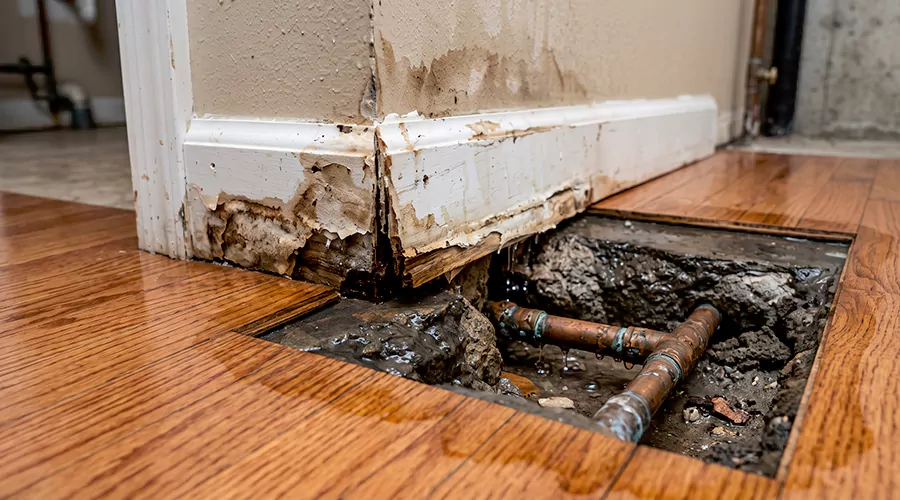
Common signs of a slab leak include unexplained water use and the sound of running water when fixtures are off. Warm floor areas or unexplained indoor moisture can provide additional clues. However, no single symptom proves that a pipe beneath the concrete slab is leaking. A professional slab leak repair averages about $2,280 in the United States in 2026, so identifying a suspected leak before widespread water damage develops can reduce unnecessary repair work.
A slab leak usually involves a buried water line beneath or within a concrete foundation. The hidden location means the first symptoms often appear elsewhere in the home.
What Are the Most Common Signs of a Slab Leak?
A slab leak often reveals itself through water-use changes rather than a visible dripping pipe. The strongest evidence comes from several symptoms that point in the same direction. A high water bill becomes more meaningful when the meter also moves while every fixture is off.
Watch for these signs:
- Unexpected water-meter movement: Water is being consumed while known fixtures are off.
- Higher water bills: Usage rises without a clear change in household habits.
- Running-water sounds: Water can be heard when faucets and appliances are inactive.
- Warm floor areas: A leaking buried hot-water pipe can warm the surface above it.
- Unexplained flooring moisture: Carpet or flooring becomes damp without a visible spill.
- Water-pressure changes: A significant pressurized leak can affect available flow.
- Musty odors: Moisture may remain hidden beneath flooring or in adjacent materials.
- Flooring damage: Wood or laminate can react to prolonged moisture exposure.
- Cracks accompanied by other leak symptoms: Soil moisture changes can affect the surrounding structure.
- Persistent water use with no visible leak: Accessible fixtures appear dry while consumption continues.
Angi identifies unexplained bills and running-water sounds among the common signs associated with slab leaks. Each sign has alternative explanations. The diagnosis should therefore combine observations rather than relying on one symptom.
How Can Your Water Meter Reveal a Hidden Leak?
A water meter can show whether water continues flowing when the property should be using none. This is one of the strongest homeowner tests for an unexplained pressurized leak. It does not reveal the leak's exact location.
EPA WaterSense recommends the following test:
- Turn off all faucets.
- Wait for toilets to finish filling.
- Stop appliances that use water.
- Disable irrigation during the test.
- Record the meter reading.
- Avoid all water use for two hours.
- Read the meter again.
- Compare the two readings.
If the reading changes, EPA says you probably have a leak somewhere in the property. A positive test does not mean the leak is automatically under the slab. A toilet or another hidden fixture leak can also cause meter movement.
Why Does a Slab Leak Increase the Water Bill?
A leaking pressurized supply line can lose water continuously even when nobody is using a faucet. The meter records this hidden flow in the same way it records intentional household water use. A small continuous loss can therefore become visible on monthly usage records. EPA reports that average household leaks can waste more than 9,300 gallons per year. It also reports that nine percent of homes have leaks wasting 50 gallons or more each day.
These figures apply to household leaks generally rather than slab leaks specifically. Compare current usage with similar earlier periods before assuming that one high bill proves an underground leak.
Why Can a Slab Leak Create a Warm Spot on the Floor?
A hot-water pipe leaking beneath the slab can transfer heat into nearby concrete and flooring. This may create a localized warm area even when the room temperature has not changed. The sign is more meaningful when it occurs together with unexplained water consumption. A warm floor is not proof of a slab leak.
Other possibilities include:
- Radiant heating.
- Sun exposure.
- Nearby HVAC equipment.
- Hot-water piping operating normally.
- Electrical equipment beneath or near the floor.
Thermal imaging can help identify unusual temperature patterns. However, FLIR explains that a thermal camera detects surface temperature differences. It does not see through walls or concrete.
Can You Hear a Slab Leak?
Pressurized water escaping through a small opening can create vibration or noise that travels through the pipe and surrounding structure. A person may notice a faint hiss or running-water sound when the home is otherwise quiet. Professional acoustic equipment works on the same physical principle. The U.S. Department of Energy explains that water escaping a pressurized line produces characteristic noise. Sensors and correlators can analyze those sounds to help locate a leak.
Household sounds can create false clues. Appliances or HVAC condensate may sound like running water. Turn off known water use before deciding that an unexplained noise comes from buried plumbing.
Can a Slab Leak Damage Flooring?
Water escaping beneath a foundation can migrate into flooring or surrounding building materials. The resulting damage depends on the volume of water and the construction above the slab. Some leaks remain below the concrete while others create visible indoor moisture.
Possible flooring symptoms include:
- Damp carpet.
- Swelling laminate.
- Loose floor coverings.
- Discoloration.
- Persistent moisture between flooring joints.
- Musty odor in a limited area.
Do not assume that flooring moisture always comes from below. Appliance leaks and exterior water intrusion can create similar damage patterns.
Do Foundation Cracks Mean You Have a Slab Leak?
Foundation cracks alone do not prove that a plumbing leak exists. Concrete can crack for several reasons. However, a leak that changes soil moisture beneath the slab can contribute to movement in some conditions. A crack deserves greater attention when other water-loss signs are present.
Compare the following situations:
| Observation | Possible Meaning |
|---|---|
| Hairline crack with no water symptoms | May be unrelated to plumbing |
| Crack plus meter movement | Hidden leak deserves investigation |
| Crack plus damp flooring | Moisture source should be identified |
| Crack plus nearby warm floor | Hot-water leak is one possibility |
| Major structural movement | Requires appropriate structural assessment |
Do not diagnose a plumbing leak solely from the shape of a concrete crack.
Can Low Water Pressure Be a Sign?
A substantial water-supply leak can reduce available water pressure or flow at fixtures. However, low pressure has many other causes. A partially closed valve or water utility issue can produce the same symptom.
Pressure changes become more useful when they begin alongside:
- Unexpected meter movement.
- A rising water bill.
- Running-water sounds.
- New indoor moisture.
- Known underground pipe deterioration.
If pressure is low throughout the entire property, first rule out broader supply issues. A slab leak should remain one possibility rather than the automatic diagnosis.
Can a Slab Leak Cause a Musty Smell?
Persistent hidden moisture can support conditions that create a musty odor around flooring or adjacent building materials. The smell does not identify the plumbing source. It simply indicates that moisture may be remaining where it should not.
Inspect nearby accessible sources first.
Check:
- Sinks.
- Refrigerators.
- Dishwashers.
- Toilets.
- HVAC condensate.
- Exterior walls.
A hidden slab leak becomes more plausible when those sources are dry and a meter test still indicates unexplained water use.
What Is the Best DIY Test for a Suspected Slab Leak?
A water-meter test is safer and more useful than opening flooring or concrete. It can confirm unexplained water flow without damaging the building. The next step is ruling out common accessible leaks before blaming buried plumbing.
Use this sequence:
- Perform the two-hour EPA meter test.
- Check toilets for silent leaks.
- Inspect faucets and visible supply connections.
- Check water-using appliances.
- Inspect outdoor faucets.
- Look for irrigation leaks.
- Repeat the meter test if needed.
- Document any indoor moisture or warm floor areas.
EPA WaterSense recommends a toilet dye test because silent toilet leaks can consume water without obvious dripping. Ruling out ordinary fixture leaks makes a hidden underground source more plausible.
How Are Slab Leaks Confirmed?
Professional slab leak detection combines evidence from water use with tools that narrow the leak location. Acoustic equipment can listen for pressurized leakage. Thermal imaging can locate temperature patterns, while moisture meters help confirm whether a suspicious area is actually wet.
Common methods include:
- Acoustic listening.
- Leak-noise correlation.
- Thermal imaging.
- Moisture meters.
- Pressure testing.
- Pipe tracing.
Thermal imaging is most useful as part of a larger diagnostic process. FLIR states that a thermal pattern alone does not guarantee that moisture is present and recommends confirming suspected moisture with a meter.
How Much Does Slab Leak Detection Cost?
Slab leak detection costs approximately 150–400 in the United States in 2026, averaging about $280. The complete slab leak repair averages $2,280 and most projects fall between $630 and $4,400. The detection fee can help reduce unnecessary demolition by narrowing the location before access work begins. Do not confuse detection costs with the complete repair bill.
The final expense may include plumbing repair or concrete work. Finished flooring can create separate restoration expenses.
When Should You Call a Professional?
Professional leak detection is appropriate when the meter confirms unexplained water use but no accessible fixture leak can be found. Prompt diagnosis also makes sense when floor moisture or running-water sounds suggest a hidden pressurized leak.
Seek professional investigation when:
- The water meter moves during a no-use test.
- Accessible fixtures are dry.
- Flooring develops unexplained moisture.
- A localized warm area appears with other leak symptoms.
- Water pressure changes unexpectedly.
- Running water is heard inside the building structure.
- Slab access may be required.
The objective is to identify the leak before concrete or finished flooring is removed.
How Can You Reduce the Risk of Slab Leak Damage?
Early detection is the most practical way to reduce damage from an underground leak. Buried plumbing cannot be inspected as easily as exposed piping, so unusual water consumption provides an important warning.
Useful habits include:
- Review water usage monthly.
- Investigate unexplained bill changes.
- Perform an occasional no-use meter test.
- Fix ordinary household leaks promptly.
- Maintain appropriate water pressure.
- Watch for recurring floor moisture.
- Keep plumbing maintenance records.
EPA notes that leak-detection and flow-monitoring devices can identify irregular water-use patterns or unexpected moisture. Some systems can also activate an automatic shutoff.
Conclusion
The most useful signs of a slab leak are unexplained water use and evidence of moisture that cannot be traced to an accessible fixture. Warm floors or running-water sounds can provide additional clues. No single symptom confirms the diagnosis. Start with a two-hour water-meter test and rule out toilets or other visible leaks. When unexplained consumption remains, professional leak detection can narrow the location before concrete is opened.
Frequently Asked Questions
Does a high water bill always mean a slab leak?
No. Toilets and irrigation systems can also waste substantial amounts of water.
Is a warm floor proof of a hot-water slab leak?
No. It becomes more meaningful when combined with unexplained water use or other leak symptoms.
Can a slab leak exist without visible water?
Yes. Water can remain beneath the concrete or migrate through the soil without appearing indoors immediately.
Will the water meter detect a slab leak?
It can indicate unexplained flow from a pressurized supply leak. It cannot identify the leak's location.
Can a slab leak cause mold?
Hidden moisture can contribute to damp building materials. Whether mold develops depends on where water travels and how long materials remain wet.